As the gods evolved from their animistic origins, their attributes and powers dramatically increased.
These new gods were created by human in their own image and likeness: not the other way around.
Like their human creators, the gods acquired families, relatives, and especially important: Divine rivals who threatened to diminish their power.
We know that myths themselves are not “true”. But they may contain elements of “truish” in that they recognized the systole and diastole of life earthly experience. These were the antinomies that rule all things: Creatures strive to protect their space; All life is a journey toward death; Winter always gives way to Spring; What goes UP must come Down, and so on.
Here is a very short list of key actors of such natural rivalries:
Mazda/Ahriman
Osiris/Set,
Zeus/Prometheus,
Olympians/Titans,
Yahweh/Lucifer,
Jesus/Satan.
These innovations greatly enhanced the realism and drama of the of the stories of the gods. And only now, for the first time in human history, religion could now become fully MONETIZED. Shamans would morph into clergy, myths would be codified into absolute powerful truths, and huge sums of money would be gathered for temples and other religious purposes. Soon, the Pyramids of Egypt would become the wonder of the world, and much later, the Vatican of Catholicism would rule the Western world.
But as we shall soon see, a series of doctrinal errors and would challenge Chritianity’s swift march to hegemony.
The Gods Must Learn to Work in Mysterious Ways:
Religions around the world became prosperous for the clergy and the elites. And yet, the lives of common citizens were not necessarily improved. The daily challenges of life remained unchanged for many. It was mow time to ask: had the gods forsaken us? Were the priests not up to the task of appeasing the gods on our behalf? Who shall we blame for this failure to deliver?
It was time for religious hierarchies to defend their gods.
The earliest effort to justify the ways of god to man occurred in Sumeria during the second millennium B.C.E.
At a loss to explain why one city received good fortune and another didn’t– especially when the disadvantaged city performed just as many sacrifices as the favored one –Sumerian priests invented a council of the gods which met once a year to apportion justice.
It was at this council– the Anunnaki– that a god of the city of Lagash might be outvoted in favor of the god of Uruk–a gimmick that insulated priests of Lagash from an accusation that they failed to deliver for their dependents. But the existence of the Anunnaki proved that here was a process that governed human events after all. Lagash just didn’t get the good breast this time around. But it was neither the god’s nor the priest’s fault.
A much later Lucretius, expositor of Epicureanism, was not deceived:
“The nature of things has by no means been made for us by a divine power: so great are the defects with which it (the world) is encumbered.”
We skate close to the Post Modern with remarks like these. Lucretius understood that tragic events and varieties of injustice could not forever be excused by attributing them to a benevolent god who was either outvoted, or who had some mysterious plan.
No one has better captured the frustration caused by doctrinal contradiction better than Mark Twain. The conclusion of his Mysterious Stranger describes the absurdity of divine “goodness” this way:
According to Twain, we foolishly continue to believe in a God who:
“Could (have made) good children as easily as bad, yet preferred to make bad ones;
who could have made every one of them happy, yet never made a single, happy one;
who made them prize their bitter life, yet stingily cut it short;
who gave his angels eternal happiness unearned, yet required his other children to earn it;
who gave his angels painless lives, yet cursed his other children with biting miseries and maladies of mind and body;
who mouths justice and invented hell–mouths mercy and invented hell–
mouths Golden rules, and forgiveness multiplied seventy times seven, and invented hell;
who mouths morals to other people and has none himself; who frowns upon crimes, yet commits them all;
who created man without invitation, then tries to shuffle the responsibility for man’s acts upon man,
instead of honorably placing it where it belongs, upon himself;
and finally, with altogether divine obtuseness, invites this poor, abused slave to worship him!”
(Mark Twain)
Twain’s electrifying repetition of the word “Hell!” is an unparalleled howl of rage at a terrorizing Christian doctrinal. It is a howl of rage, not fear.
Who was responsible for turning religion into a towering house of guilt, punishment, terror and fear?
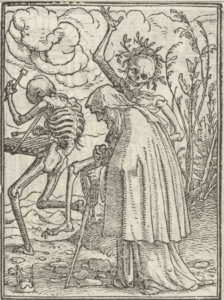
Doctrinal mistakes are historically commonplace; but deliberate religious sadistic must be be deliberately rejected by all.
It Wasn’t Alwats This Way:
Many early beliefs understood death as a mere going away: a waiting period, comforted only by a few personal objects placed alongside the deceased. As soon as the deceased was forgotten by those still living, he/she would vanish into the utter darkness.
This is the world of Gilgamesh (see Kansas Forever) who, thanks to the advice of Utnapishtim, and by Siduri the Barmaid.
“Gilgamesh, whither are you wandering? The life which you look for, you will never find!
For when the gods created man, they let death be his share, and life withheld in their own hands.
Gilgamesh, fill your belly. Day and night make merry.
Let days be full of joy, dance and make music day and night. And wear fresh clothes.
And wash your head and bathe.
Look at the child that is holding your hand, and let your wife delight in your embrace!
These things alone are the concern of men.”
In summary, this is what Twain seems to be telling us:
The simple, naturalistic idea of Death has been hijacked by Priests and the Elites to intimidate and control the common people.
Religion has become a Monetized scheme that terrorize the gullible, and that terrorizes the ignorant faithful.
None of what they tell us is true.
From Osiris to Christianity: Coercive Religious Terror Begins:
By the 5th Dynasty of Egypt, the myths of Osiris and Isis were regnant. They were the divine children of Ouranos and Gaea–the creators of the Universe. In the story, Osiris was slain by his jealous brother Set–god of death. Set was jealous of Osiris who was loved by all as the god of life and growing things. Set tricks Osiris to lie down in a coffin in order to test its fine qualities. Set slammed the lid, stabbed into its surface to kill his trapped brother, and sent him don the Nile. After an exhausting and difficult search, Isis finds the corpse, and using her divine powers, managed to restore him to life. Now fully alive, Osiris now became the judge of the quick and the dead.
Semektet and Ra: Renewal of the Sun:
The Egyptian Sun God Ra daily across the 12 hours of the day led by Semektet, the Solar Bark. During the day long journey, Ra gathers up the mummies of deceased. Their destination: the 7th hour of the night where the purity of their hearts will be weighed by Osiris and his assistant Anubis.
As Ra enters the darkness of the 12 hours of darkness, he slumps and seems to die. But the Solar Bark continues moving forward until it stops at the seventh hour of the night.
Each heart is weighted against the scale of Maat (Righteousness). Those who hearts are pure will receive wings and begin their flight to Kentamientu–the eternal hunting ground.
Those who do not pass the testy are handed over to Apophis, the giant crocodile.
At completion of the last judgment, Semektet continues to the Eleventh Hour of the night. Daylight approaches, and the Sun God Ra is dramatically restored to life by Khepri the Renewar: a divine dung beetle who fastens himself to Rhaw’s chest and breathes new life into him. The boat crosses into the new day time, and the 12 hour journey through the day now begins anew.
A comparison of the storys of Osiris and the much later cult of Jesus illustrates this heritage:
Both Osiris and Jesus are sons of a gods who rule the universe (Jehovah, Ouranos).
Both Jesus and Osiris are slain by “rivals”: Jews and Pilate, Set, God of Dessication.
After being slain, both Osiris and Jesus magically journey to the underworld.
Both Jesus and Osiris will be miraculously resurrected to life and released from the underworld to return to life.
Each has a female consort or helper to assist then to be successful: Mary, Magdolin, Isis.
After being resurrected, both Osiris and Jesus become judges of all those who will live forever, versus those who will be punished forever or die.
Both Osiris and Jesus have divine allies: Horus, Khepri, Anubis or Saints and Angels.
Pagan Roots of Christianity:
Christianity borrowed numerous beliefs from ancient Egypt, as well from the pagan Greeks and Romans. Among these: the belief that a god has a divine son born of a divine mother including. Mary begins as a mortal and is later elevated to divine status. Mary is the virgin “Mother of Jesus,”, believed by Christians to be God or at least a “Son of God.” Instead of dying, as all mortals ultimately do, Marky ascends to heaven where she continues to play a vital role as the “Great Intercessor.” Despite the fact that she was a human, she enjoys the status and powers of a pagan goddess.
Pagan religions often create a variety range of divine to interact with, and assist, their most prominent deities. Among these we remember the Egyptian Horus, Khepri and Anubis as just a few key players. Similarly, Christian offered a complete rolodex as well. Consider the numbers of Angels. These were ranked in order of their powers and utility. The famous Nine Orders of Angels included these ranked members: Seraphim, Cerubim, Thrones, Principalities, Virtues, Dominatrions, Archangels, Angel and Cherubim. To this we can list a huge number of Saints, and then add the most famous of all: the Divine comprised of three gods in one: God the Father, God the Son, and God the Holy Ghost.
Such magnificence and overwhelming Paganism could not completely insulate Yahweh from Christian scrutiny, however. Yahweh had became, for some Christians, a liability doctrinal liability. He drowned the world in a fit of pique. He ruthlessly punished Adam and Eve by expelling them from the Garden of Eden. Not even the creation of a new, and more gentler Son of God, Jesus, was enough to kindle religious fervor.
To obscure his obvious faults, theologians quickly added new powers to his godly portfolio. These were created to improve his stature, as well as to shield him criticism. He was a god whose actions could not be logically justified.
So to justify his faults with new mysteries was expected to legitimize all that Yahweh had done. What follows below are the explanatory powers that now assumed a prominent role in the task of explaining the Ways of God to Man.
Yahweh was not said to possess these powers:
Incomprehensibility
Incorporability
Infinity
Jealousy
Mercy
Omnibenevolence
Omnipotence
Omnipresence
Omnisapience
Oneness,
Patience
Righteousness, Sovereignty
Transcendence
Wrathfulness
Wisdom
Infinitude
Holiness, the Trinity, Faithfulness, Self-Existence, Self-Sufficiency, Justice, Immutability,
Mercy
Eternality
Goodness
Graciousness and more.
To repeat a a key thought: the purpose of doctrinal inventions was strategic. They were designed to obscure divine failure by enshrouding the deity in an impenitrable complexity of inscrutability. In the face of such complexity, it now becomes impossible for anyone to understand, let alone criticize, the god. Yes, god works in mysterious ways–a comfortable platitude that insulates the deity from criticism, from scrutiny.
We all know that anyone who lies eventually gets tangled up in the details of the lie. These ad-hoc details are concocted on the spot, are hard to remember, even harder to keep straight. Sooner or later the contradictions become visible to others. Finally, the liar becomes trapped in his own exculpatory scheme, snared by an unfortunate invention of his own devising.
As we shall see, ill advised additions to Yahweh’s repertoire of attributes ultimately entrapped the god himself. Soon enough, he will become a Houdini, floundering in doctrinal chains at the bottom of a swiftly flowing river: A pitiful god struggling to free himself from the mesh-work that theologians had crafted in order to protect him.
Yahweh : Wrecked by Success
A classic starting point of this conflicted dilemma are the attributes of Omniscience , Omnipotence and Perfection.
An Omnipotent god is one who has the power to do everything–who can do anything he desires.
An Omniscient god can foresee the future–correctly. The future that he foresees must occur exactly as foreseen because he cannot be mistaken.
A Perfect god is one who can never change, never say “oops” as he reflects upon previous actions.
This is because Perfection is defined as the condition to which there can be no improvement added.
Perfection is singular, not plural. Any change made to Perfection must, by definition, represent a state less than perfect: a diminution of the original. A perfect god cannot change his goals, not even change his location or supposed position should he ever desire to. He can have no need to move, no need to change. It would be absurd for him to have any need whatsoever. Similarly, he cannot even desire a thing because as a perfect being, he already has everything he needs. Ultimately, his Perfection cancels his Omniscience, and renders him immobile: frozen, unchangeable and everlasting. A Perfect god becomes as impotent as a statue of the Buddha. Suffice it to say, the unsophisticated Greek religion never faced this problem.
It gets worse. He is condemned to see a future that he now cannot alter. He cannot alter it because he has already seen it occur before it actually happens. It must therefore happen exactly as he foresees it. He cannot change it because to do so, an “oops,” would indicate that he is flawed, has somehow made a mistake, or desires an outcome that he had not previously thought of.
As a prisoner of his own omniscient powers, consider what horrible scenes he is compelled to witness as they unfold in real time: the enslavement of different peoples through the centuries, famine, plague, ubiquitous cruelty and injustice, the crushing effects of unrestrained capitalism, and the persistence of greed and imperialist depredation. He also foresees the abuse of indigenous children committed by catholic employees of Canadian and American schools. He is compelled to witness–in detail–the ubiquitous, well documented child abuse committed by the rest of his clergy around the world.
Faith destroying questions arise from this predicament: Does god approve of the mess his world has become? Why doesn’t he correct the evils running free in his creation? Is this the best he can come up with? Why does he permit the suffering of innocents if he is truly loving and omnipotent?
As Archibald McLeash summarized this dilemma in JB:
If God is God He is not Good;
If God is Good He is not God.
We can cannot delight in the imperfections of the world that god has apparently allowed. But we can feel some degree of schadenfreude for poor Yahweh’s dilemma. Did he have the ability to create a perfect world? If he did, why didn’t he create beings who fit to live in it peacefully?
All the implications of this dilemma converge as we examine biblical, pre-scientific ideas about human origins: the Story of the Garden of Eden and its punitive, sorrowful ending.
Were Adam and Eve set up? Did the god of the Old Testament create the garden, knowing it would never be theirs? Did he plant and nurture the tree of knowledge, knowing that its forbidden fruit would be eaten? Did He create the tempter Lucifer, his “morning star,” knowing that he would lead a host of rebellious Seraphim into damnation? And did He then place humanity’s supposed first parents into this tantalizing paradise, but only after endowing them with both a fatal curiosity and a weakness of will, so that when they fell–as He knew they would, as He knew they had to– he could then have the “satisfaction” of damning them and the vast majority of their descendants to the eternal torments of Hell?
Little Teason for Skepticism
The early Greek and Roman gods had none of these contradictions to face. Remember that remarkable fact. And what a difference this makes in terms of feeling comfortable with, or unconscious resistant to, one’s religion.
Here’s why: The Greeks knew that their gods should not be crossed or challenged. But the Olympians were not expected to be good nor consistently fair. None of them claimed to be perfect–not even “eternal.” Even Zeus knows that he will ultimately die.
As the earthy myths show, collective Olympian behavior could often be characterized as vain, petulant, grasping, pugnacious, sexually promiscuous, self aggrandizing and jealous. Yes, very human in other words. Yahweh shares several of these traits as we know. But these similarities do not derive from similarities in the religions, but rather from the fact that all deities have been created by humans in their own likeness. They are all of us, writ large.
The earliest forms of Greek religion were as simplistic as Model T’s. Superstition abounded, the empire of the unknown was enormous. There was no specific dogma to believe or adhere to. No Baltimore catechism to memorize. No confession. No burnings at the stake for disbelief. No yearning for forgiveness. No mind wracking preoccupation with guilt and the need for life long atonement. No mortal sins that led to damnation. No heaven. And no Hell as depicted here by Brueghel.
I said there was no Greek “hell.” Yes, there were myths which describe the torments of a few famous offenders: Sisyphus pushing stones uphill, Tantalus unable to eat or drink, Ixion’s wheel. But these creations were post hoc literary embellishments, products of generations of creative writers and story-teller. They added to, and embellished these novelties, and incorporated to what had always been an organic, straightforward religion. But they were not articles of faith or belief.
All religions, as they grow, accumulate myths that are dreamed up by their creators along the way. Such elaboration is a natural process, and it occurred in Christianity as well. The gospels, for example. They were written at least 80-100 or more years after the the supposed death of Jesus. The authors, some of whom use made up identities, had never met Jesus. Neither had they met anyone who had met Jesus. By the time they write their stories, all they have is folklore to guide them. Jesus left no words. The Romans, meticulous record keepers, had no record of the supposed trial, nor of the crucifixion. Romans did write about their troubles dealing with the Jews, and they had trouble with a little band that followed a deceased rabbi they named Cristus. But no one by this time had ever met Jesus; they too only had rumor and hope to sustain themselves.
When it comes to clergy: the Greeks did have temple priests, but these “priests” were administrative positions, not especially “religious.” The Roman scholar Plutarch served for a time as head temple priest at Delphi–something like a Greek National Cathedral. Similarly, Julius Caesar became Pontifex Maximus of Rome’s state cult in 63 BCE. He was not selected for his special “faith” or for his spirituality. His appointment was a political gift, a sinecure, a reward for service to empire. No one thought of him as the living, Papal, earthly representative of god, ably supported by a dedicated religious hierarchy. Instead, Caesar was known to be a clever, life long power seeker, and an enormously successful military commander. Both a highly capable and a brutal man.
The early Greeks had no Hell to be threatened with. At death, a Greek descended to a dark cavern, lived there for a generation or two in the chill darkness, and then vanished about the same time everyone on earth–who remembered him– had died.
The early Greeks had no Hell to be threatened with. At death, a Greek descended to a dark cavern, lived there for a generation or two in the chill darkness, and then vanished about the same time everyone on earth–who remembered him– had died.

(Bosch Images of the Christian Hell)
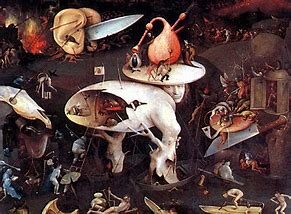
(Bosch Images of the Christian Hell)
Punishments for serious behavioral offenses did exist at the city, state and national level. But never for dis-belief. And most important, the usual categories of sin that most humans naturally indulged in could be enjoyed as part of life. As long as no one well connected was hurt as a result. But they did not lead to eternal flame and damnation. This is because Greek religious practice, religious life, were not cosmic tests of human purity or faithfulness. Guilt was not inherited and required no life long expiation.
The Greek gods can help you, or they can get in your way. The practical thing to do would be to make personal or material offerings to a god who might be offended. The recipe for success and long life: Talk privately to the god and show your respect. Religious worship is contractual, not spiritual.
Of special interest: The early Greeks had no Heaven such as that envisioned in Christianity. Zeus was powerful, but not absolutely as Yahweh was believed to be. Poor Zeus lived on a literal mountain–Mount Olympus–not in the empyrean. The Greek Elysium (heaven) was not an article of faith. It was a cultural embellishment most likely influenced by eastern mythologies: stories from the East that gained a foothold into Greece near the end of the archaic period.
So it is that the idea of overthrowing the gods–something Mark Twain would have favored–was not popular in the Archaic period, not a fast growing meme. There just wasn’t much motivation to do it. Until the time of Oedipus.